· iOS
Cadence
A self-initiated iOS habit app designed without streaks, badges, or guilt. It supports consistency through a calm daily rhythm instead of pressure.
- Role
- Concept, UX & UI design
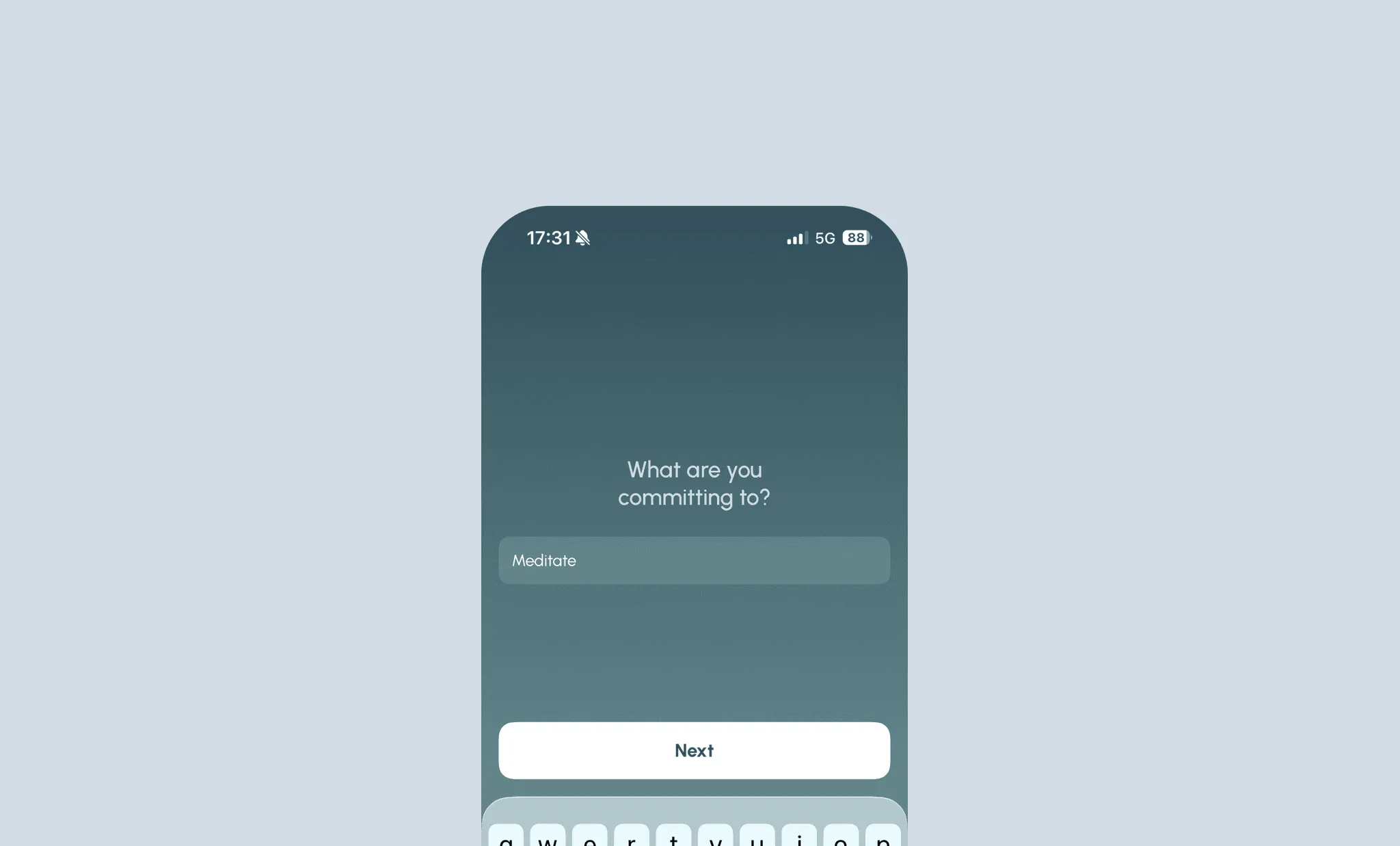
Introduction
Over the past few years, I became fascinated by building habits. I started challenging myself to stick with new things: running, meditating, learning something new. Not because I had to, but because I was curious who I would become if I consistently gave something my attention.
Along the way, I noticed how thin the line is between discipline and pressure. Not wanting to break a streak. Going for a run anyway, not because you feel motivated, but because you’re afraid of losing something if you don’t.
As a digital product designer, I recognise those mechanisms. Many habit apps help you build routines, but at the same time they create dependency. They use notifications, badges, and streaks that motivate you, but also add tension.
Cadence started as a personal experiment: what happens if you design a habit app without manipulation? Without pressure. Without the fear of falling behind. What remains if only the rhythm of repetition is at the centre?
Problem
Most habit apps steer behaviour through external triggers like streaks, badges, and notifications. While this can be motivating in the short term, the focus often shifts from intrinsic intention to maintaining the system itself. What starts as a personal choice to build a habit slowly turns into pressure to keep a streak alive or not miss a goal. How do you design a habit app that supports consistency without creating dependency or performance pressure?
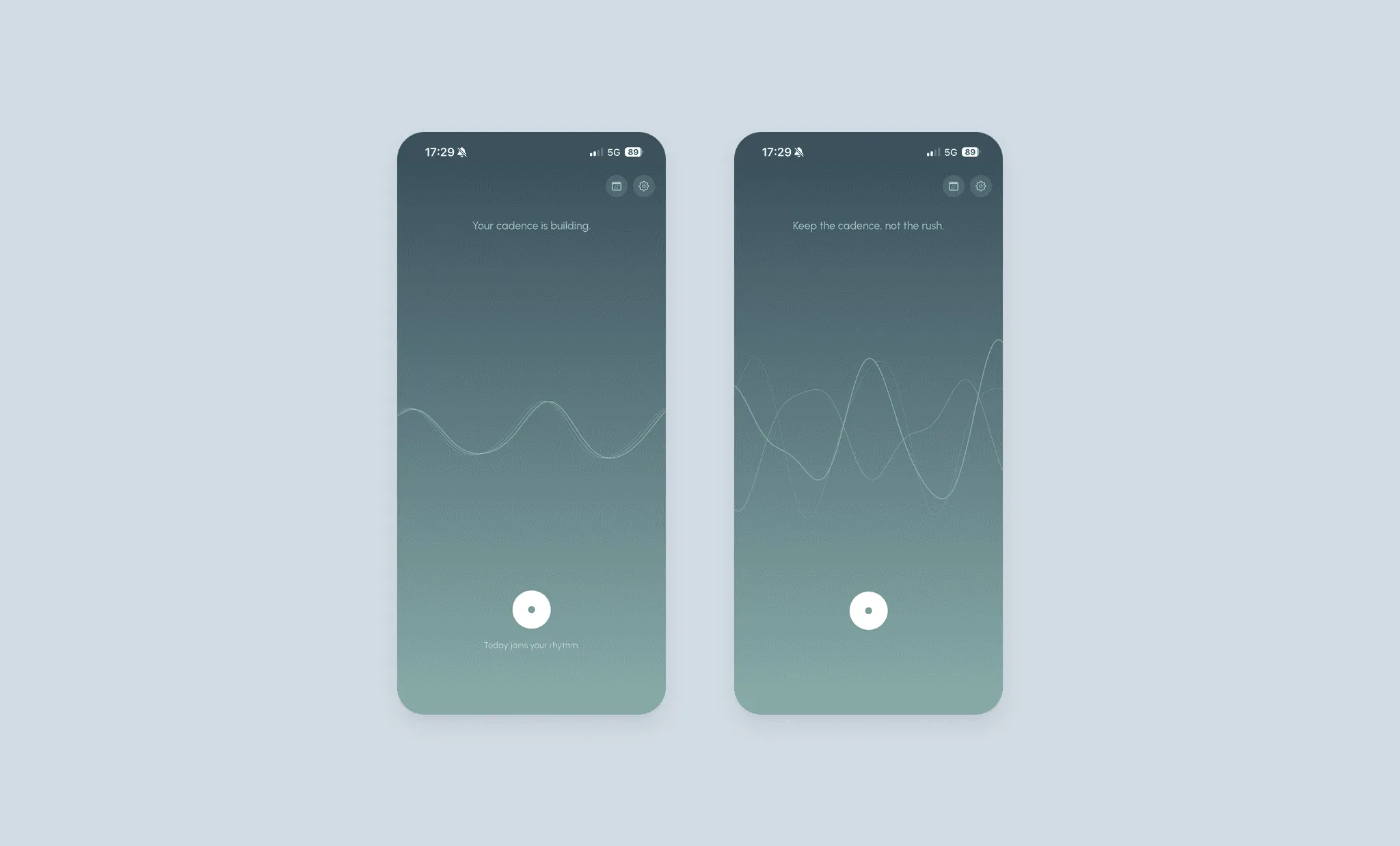
From idea to rhythm
Cadence didn’t start with designing screens, but with a design question. The central tension was clear: how do you build a system that supports consistency without creating pressure? I approached the process not as someone building a set of features, but as someone designing a mindset.
In the first phase, I looked closely at what existing habit apps actually do. I analysed patterns around streaks, notification behaviour, reward systems, and onboarding flows. What stood out was how strongly almost every product leans on external motivation — the interface often becomes a trigger machine. That insight didn’t turn into criticism, but into a starting point.
From there, I defined a set of design principles to guide every decision: no loss mechanics, no guilt-driven language, no manipulative notifications, and no dependency on daily validation. That’s where the idea of the “pulse” emerged — a rhythmic check-in that supports presence without applying pressure. No countdowns, no alarms, just a subtle invitation.
The process consisted of designing, testing, scaling back, and refining. Not from the question “how do we make this more addictive?” but “how do we make this more honest?” Every iteration was tested against the same core question: does this support the user’s rhythm, or does it pull attention back to the system itself?
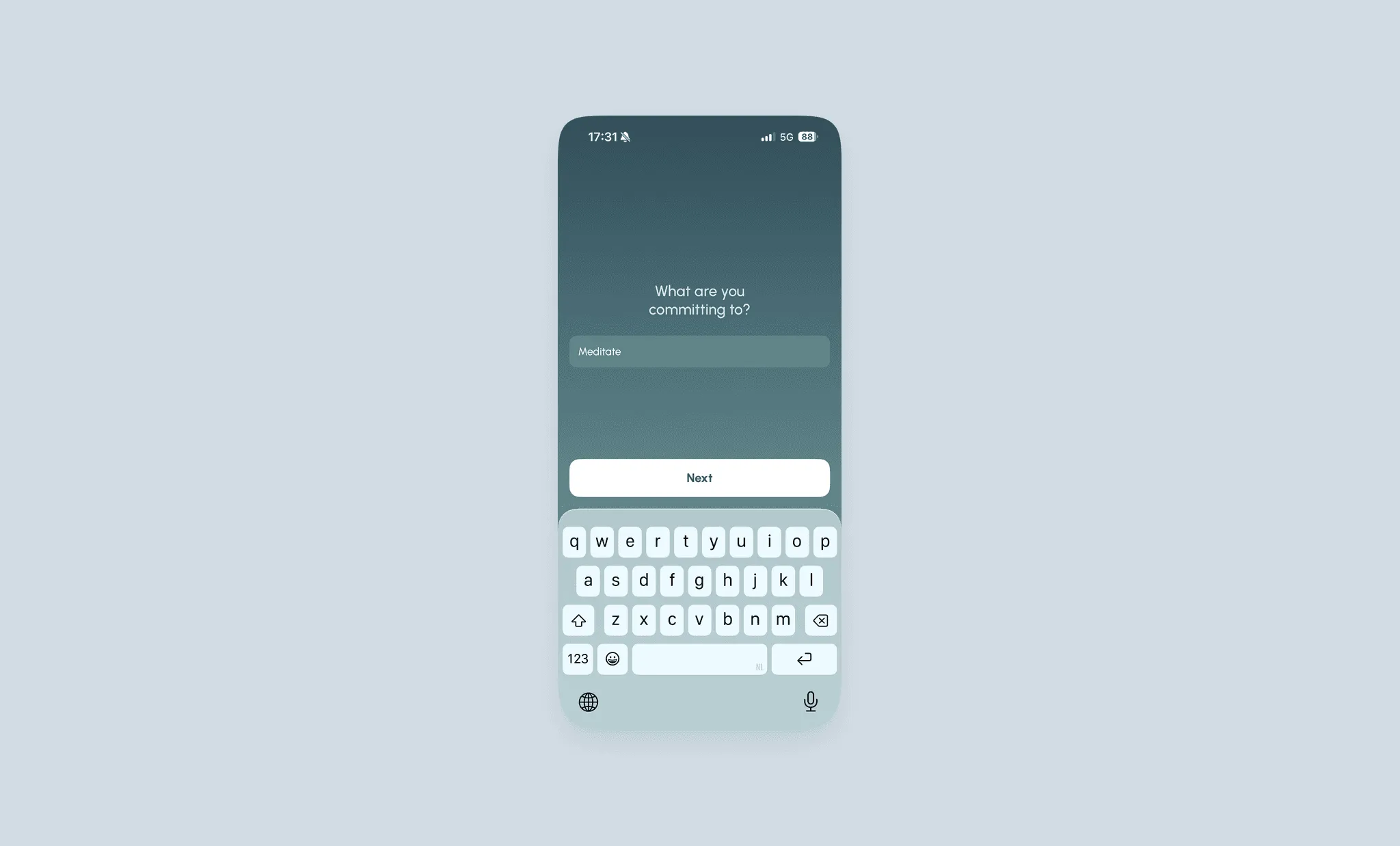
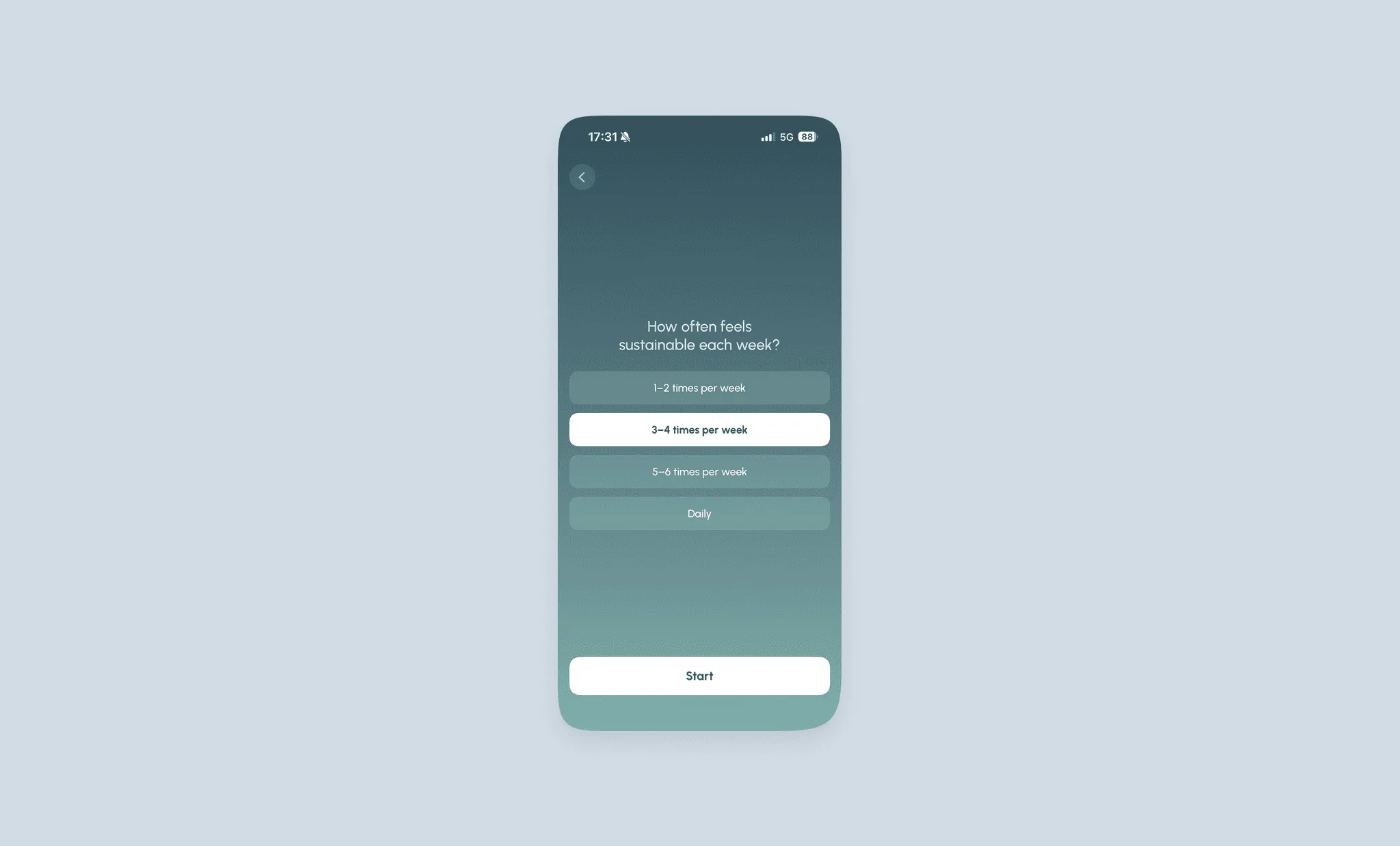
Design challenges
A few questions shaped the design:
- How do you support behaviour change without using streaks, badges, or pressure driven by push notifications?
- How do you show consistency without a missed day feeling like failure or loss?
- How do you write microcopy that feels gentle and affirming instead of corrective or pushy?
- How do you keep the interface calm and simple, without the experience feeling empty or superficial?
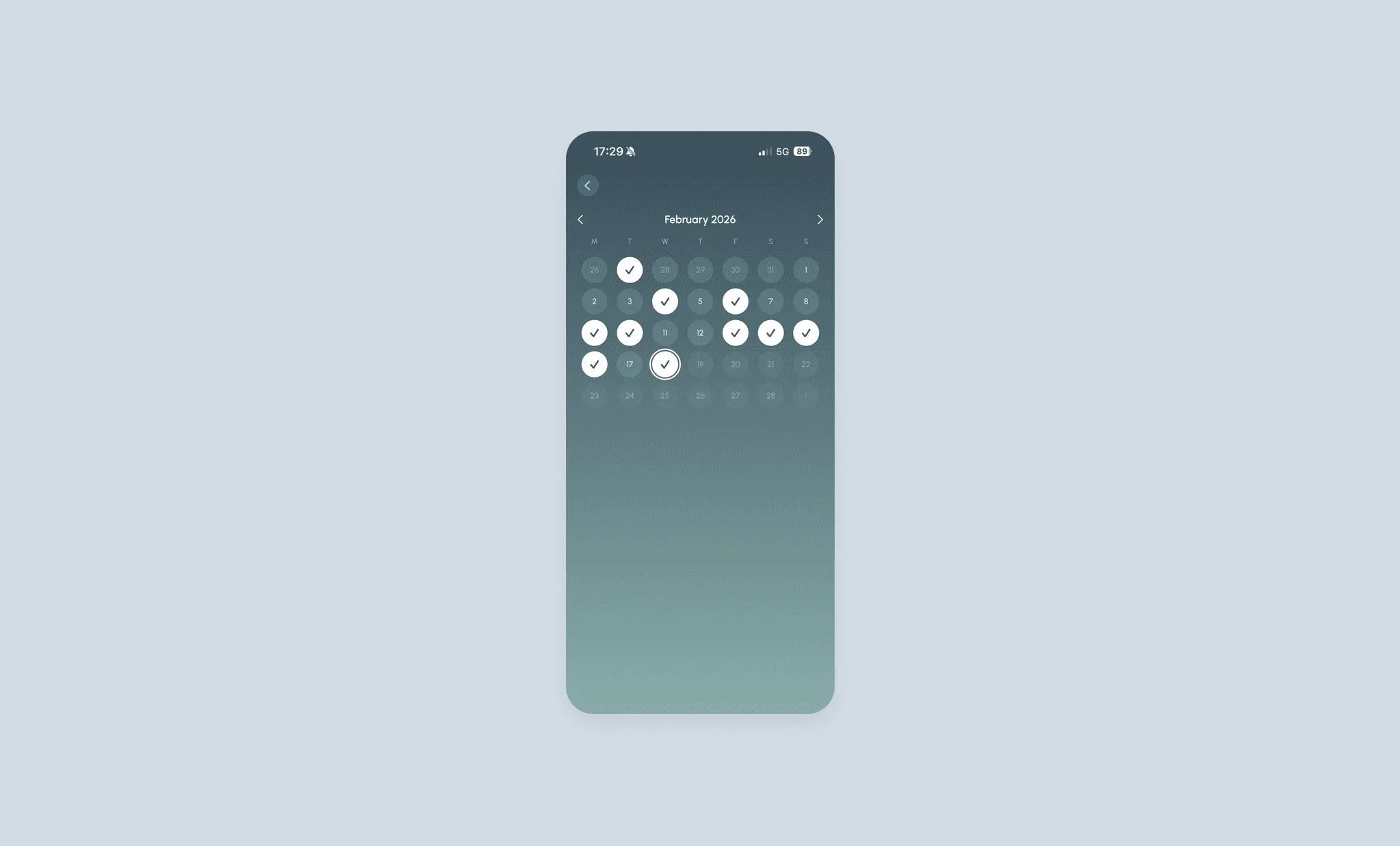
Where it stands
Cadence is therefore not just a product, but an exploration of what happens when you consciously design without manipulation. For now the project has stayed at the design stage — the concept, flows, and interface are fully worked out. Development into a real iOS app is something I plan to pick up at a later moment.